

In modern industrial infrastructure, building electrical systems, and data center operations, Cable Management is the invisible backbone that guarantees stable system operation. Among various wiring support facilities, the U-Type Cable Tray has become one of the most widely used structural solutions due to its open design, strong load-bearing capacity, and flexible installation adaptability. However, latest industry field detection data reveals a startling hidden danger: low-cost, inferior U-Type Cable Tray alternatives circulating in the market carry a7% annual failure rate, a seemingly mild statistical figure that triggers cascading safety risks, equipment downtime, and substantial economic losses for industrial and commercial electrical systems. For engineering contractors, facility managers, and industrial system operators, choosing cheap substandard products is essentially gambling on the long-term operational safety of the entire system.
As a core component of Industrial Cable Solutions, the U-Type Cable Tray undertakes critical functions such as cable wiring protection, load-bearing support, heat dissipation ventilation, and electrical safety isolation. Unlike closed cable conduits and simple ladder-type supports, the U-shaped grooved structure features high structural stability, convenient daily inspection and maintenance, and excellent adaptability to complex working conditions including high temperature, high humidity, and strong wind in industrial workshops, power plants, and outdoor engineering projects. QualifiedDurable Cable Tray products can serve stably for 15 to 20 years under standard industrial environments, with extremely low failure probability, and have long been recognized as a reliable basic facility for standardized cable management systems.
Nevertheless, the fierce market competition in the cable accessory industry has spawned a large number of low-cost shoddy products. Industry inspection reports from the first half of 2026 show that among low-priced U-Type Cable Tray products with prices 30%–50% lower than industry standard qualified products, the annual field failure rate reaches 7%, which is 14 times higher than the 0.5% failure rate of standard durable products. The failure forms are diverse and highly destructive, including structural deformation and bending, anti-corrosion coating peeling, bracket loosening and falling off, edge burr abrasion of cable insulation layers, and even overall structural collapse in severe cases. These faults do not merely affect the aesthetics of cable layout, but directly threaten the operational safety of the entire electrical and control system.
In-depth analysis of failure causes shows that the core problems of low-cost inferior U-Type Cable Tray focus on material cut corners and non-standard production processes. Regular Durable Cable Tray adopts high-quality hot-dip galvanized steel, aluminum alloy or stainless steel materials, with strict control of plate thickness, structural bending precision and anti-corrosion process parameters. In contrast, cheap alternatives mostly use recycled thin steel plates with uneven thickness, and the galvanizing process is simplified or replaced with low-cost spray painting, resulting in poor anti-rust and anti-corrosion performance. In high-salt fog, high humidity and corrosive industrial environments, these inferior products are prone to rapid oxidation and rust within 2 to 3 years of operation, leading to structural strength attenuation and eventual failure.
Structural design defects are another key trigger for the 7% high failure rate. Standard U-Type Cable Tray undergoes professional mechanical calculation and seismic performance testing, with scientific groove depth, bending angle and reinforcing rib design, which can withstand standard static load and extreme environmental impacts such as strong winds and slight earthquakes. However, to reduce costs, low-cost products omit reinforcing structures, reduce overall load-bearing standards, and have unqualified splicing and fixing structures. Field test data shows that inferior U-shaped trays are prone to buckling deformation under 80% of the standard design load, and their seismic stability and wind resistance are far lower than industry specifications, completely failing to meet the safety standards of professional Industrial Cable Solutions.
The hidden dangers brought by high failure rate cheap U-Type Cable Tray are far more serious than the cost savings in the short term. In industrial production scenarios such as manufacturing workshops, chemical plants and power stations, cable tray deformation and falling off will squeeze and wear cable insulation layers, easily causing short circuits, leakage and even electrical fire accidents. A 2025 industrial electrical safety accident statistics show that 12% of on-site electrical equipment failures are indirectly caused by cable tray damage, among which inferior U-Type Cable Tray failures account for more than 60% of the responsible cases, causing direct economic losses of millions of dollars for many enterprises. In nuclear power and energy infrastructure projects, unqualified cable tray defects may even affect the normal operation of safety systems, bringing irreversible safety risks to engineering facilities.
For data centers and intelligent building systems with high requirements for continuous operation, the risks of inferior cable trays are more prominent. Efficient Cable Management relies on stable and orderly cable support facilities to ensure uniform heat dissipation, convenient line troubleshooting and stable signal transmission. Failed low-cost U-Type Cable Tray will cause chaotic cable stacking, poor heat dissipation, accelerated cable aging, and frequent equipment downtime and signal interference. For enterprises that pursue 24-hour uninterrupted operation, unexpected system shutdown and maintenance costs caused by tray failures far exceed the initial procurement savings, forming a typical "penny wise and pound foolish" engineering mistake.
Industry experts emphasize that cable management systems are the basic guarantee of industrial system stability, and there is no room for compromise on safety and durability. The 7% failure rate of cheap U-Type Cable Tray is not a trivial quality fluctuation, but a clear warning of systematic quality risks. Many engineering parties and enterprise procurement teams ignore industry standards in the pursuit of low procurement costs, ignoring the long-term operating costs and safety risks brought by inferior products. QualifiedDurable Cable Tray has higher upfront procurement costs, but it can effectively reduce later maintenance frequency, avoid equipment downtime losses and safety accident risks, and realize the optimal balance of full-cycle cost and safety.
At present, the industry is accelerating the promotion of standardized Industrial Cable Solutions, advocating engineering procurement to abandon low-cost inferior products and select certified U-Type Cable Tray that meets national and international industry standards. Regular qualified products have strict quality control in material selection, processing technology, structural design and anti-corrosion treatment, with stable load-bearing performance, strong environmental adaptability and ultra-low failure rate, which can fully meet the long-term operation needs of industrial, commercial and infrastructure projects. Meanwhile, industry associations are strengthening market rectification, cracking down on counterfeit and shoddy cable tray products, and standardizing the market order of cable management facilities.
In the field engineering construction and daily facility operation management, practitioners should establish a full-cycle safety awareness of cable management. In the procurement link, it is necessary to abandon the single price-oriented evaluation standard and take product durability, safety certification, environmental adaptability and after-sales guarantee as the core evaluation indicators. In the installation and acceptance link, strictly check the structural size, material quality and anti-corrosion effect of U-Type Cable Tray to eliminate unqualified products from entering the construction site. In the daily operation and maintenance link, regular inspection of tray structure stability and corrosion status should be included in the standardized maintenance system to eliminate potential safety hazards in advance.
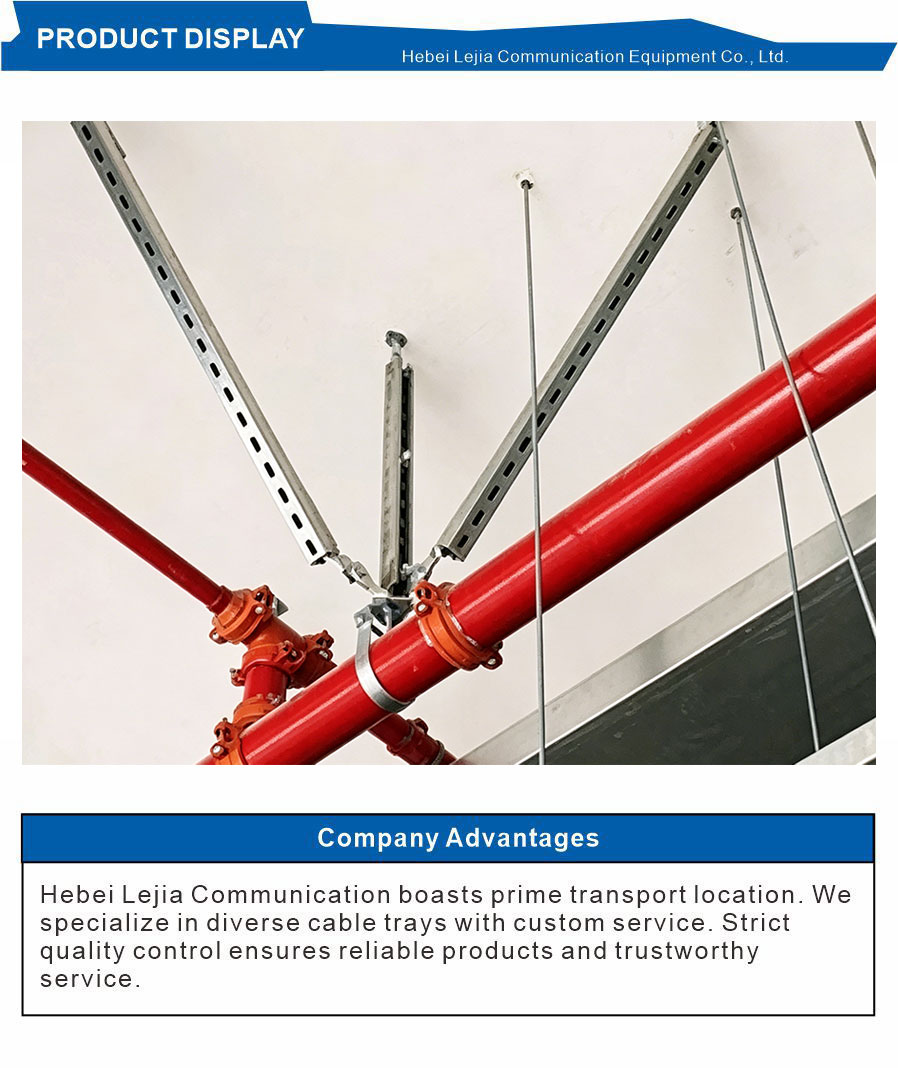
As industrial infrastructure becomes increasingly intelligent, refined and safe, the importance of standardized Cable Management systems is becoming more prominent. As a key basic facility, high-quality U-Type Cable Tray and Durable Cable Tray series products are indispensable to ensure the stable operation of electrical systems. The 7% failure rate of cheap alternatives sounds the alarm for the entire industry: any cost compromise on basic safety facilities will eventually be fed back into higher operational risks and economic losses. Only by adopting standardized, durable and safe Industrial Cable Solutions can enterprises build a solid safety barrier for system operation, avoid unnecessary operational risks, and ensure the long-term stable and safe development of industrial and building electrical systems.