Cable trays serve as core infrastructure for cable routing inside factories, commercial buildings, data centers and power‑transmission projects. Poor‑quality cable trays are prone to rust, structural deformation and connection loosening, bringing hidden risks to circuit safety and increasing later‑stage maintenance workload for engineering contractors. As project owners raise higher requirements for wiring safety, Quality Cable Management becomes a key evaluation indicator for engineering procurement. Well‑manufactured Durable Cable Trays have become a mainstream choice, while cost‑effective Affordable Cable Solutions meet the budget‑control demands of small‑and‑medium‑sized projects.
Industry Knowledge
The comprehensive performance of cable trays mainly depends on base‑material selection, sheet thickness, surface anti‑corrosion treatment and stamping‑processing precision. Galvanized steel is one of the most widely‑used raw materials for cable trays. Hot‑dip galvanizing and electro‑galvanizing represent two mainstream anti‑corrosion processes. Hot‑dip galvanized layers feature strong anti‑rust performance and suit outdoor, humid and corrosive working environments. Electro‑galvanized products are more suitable for indoor dry‑condition scenarios with lower comprehensive cost.
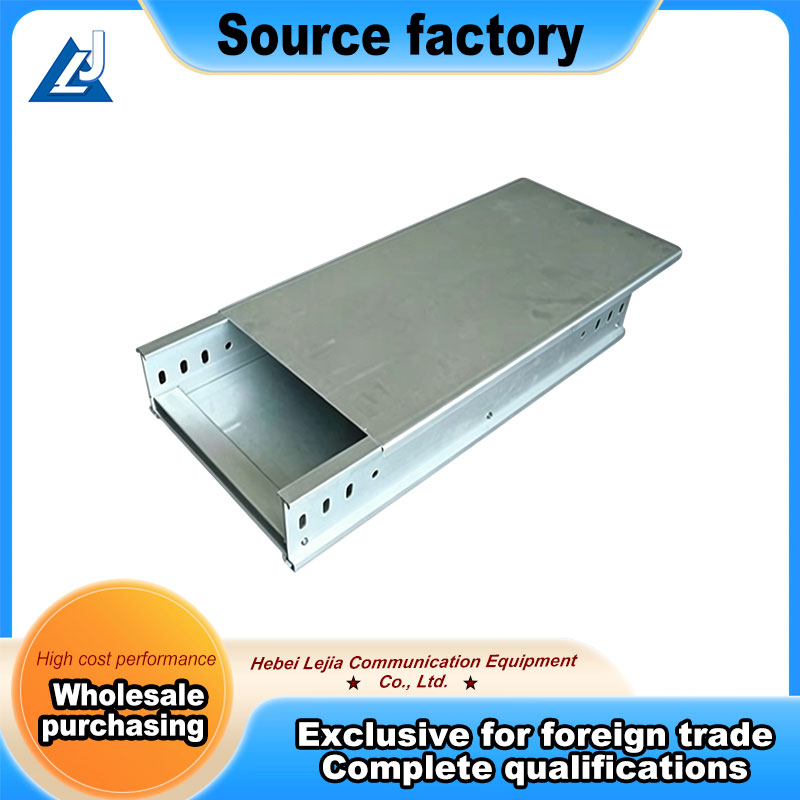
Durable Cable Trays adopt thickened steel plates, precise punching and bending craft. The ladder‑type structure shown in the picture features hollow design, which facilitates cable heat dissipation and weight reduction, widely applied in power‑plant workshops and large‑scale industrial parks. Unqualified suppliers cut costs by thinning steel sheets. Such products will deform under cable weight or external impact, threatening wiring safety.
Quality Cable Management is not limited to trays themselves. It covers complete system matching including connecting pieces, supports, fasteners and on‑site installation standards. Many purchasers only focus on unit price of trays while ignoring matching accessories, which causes unstable overall system performance. Affordable Cable Solutions do not equal low‑quality products. Reliable suppliers realize cost control through optimized production flow instead of downgrading raw‑material standards.
Customer Case
One industrial‑park general‑contractor once purchased low‑cost cable trays for a factory‑building reconstruction project. Those products adopted thin steel sheets with simple electro‑galvanized surface. Half‑a‑year after project delivery, partial trays appeared bending deformation and surface rust spots under the influence of workshop humid environment. Construction teams had to carry out repeated inspection and partial replacement, generating extra labor and material costs.
Later, the contractor optimized procurement standards and selected standardized Durable Cable Trays for new‑phase workshop projects. These ladder‑type cable trays adopt hot‑dip galvanizing treatment, with strictly controlled sheet thickness and precise connection holes. After two‑year field operation, no obvious deformation or large‑area rust occurred. For auxiliary wiring areas with low load requirements inside the park, the contractor adopted Affordable Cable Solutions with reasonable material configuration. This differentiated procurement mode realized scientific cost allocation. The whole‑set Quality Cable Management system effectively reduced hidden safety troubles and improved the acceptance qualification rate of engineering projects.
Common Problems
- Surface rust and corrosion: Mainly caused by insufficient anti‑corrosion layer thickness. Electro‑galvanized products are easy to rust when used in humid outdoor environments.
- Tray body bending and deformation: Steel sheet thickness fails to meet load requirements; improper installation span also leads to deformation under cable gravity.
- Connection dislocation and loose splicing: Stamping hole position deviation causes poor fitting between trays and connecting accessories.
- Poor heat‑dissipation effect: Improper selection of tray structure. Solid‑bottom trays are not suitable for high‑density power‑cable laying scenarios.
Procurement and Installation Suggestions
Purchasers should not simply compare unit prices. Verify steel‑sheet thickness, anti‑corrosion‑process certificates and load‑bearing‑test data. Prioritize Durable Cable Trays for heavy‑load, outdoor and corrosive‑environment projects. For indoor low‑load auxiliary wiring, select qualified Affordable Cable Solutions. Strictly follow construction specifications to control installation span, and match complete supporting accessories to realize reliable Quality Cable Management.
As basic wiring infrastructure, cable trays affect long‑term circuit‑operation safety. Scientific material selection and standardized construction effectively reduce later‑stage renovation and maintenance pressure for engineering parties.